Bordeaux wine region: the most essential Bordeaux châteaux
Bordeaux wine region: the most essential Bordeaux châteaux
July 15th, 2024
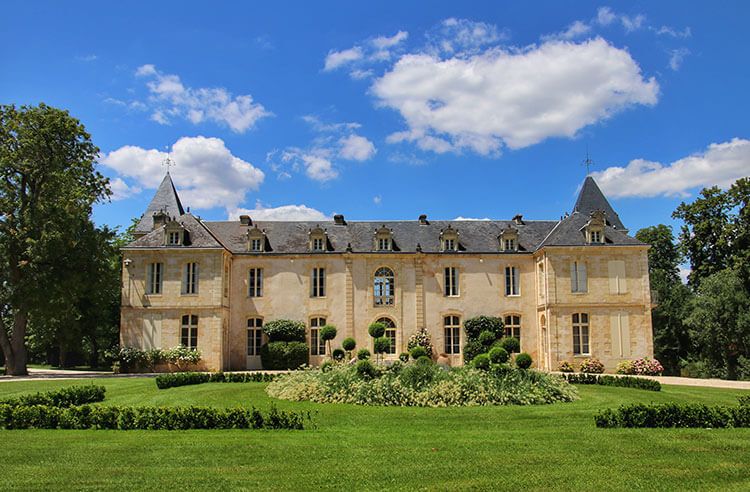
In Bordeaux, France, châteaux play a crucial role in the history and culture of local wines. These properties, often with centuries of history, uphold the winemaking traditions of this region. The globally recognized reputation of Bordeaux wines is primarily attributed to the prestige and quality of these châteaux. Over the years, these properties have become ambassadors of the Bordeaux wine region, representing the excellence that characterizes the wines produced in Bordeaux, reflecting a commitment to quality and tradition. In addition to their importance in wine production, Bordeaux châteaux also play a fundamental role in wine tourism, attracting visitors worldwide to taste their wines, explore their vineyards, and learn about the rich history behind each property.
Let’s explore some of the most essential Bordeaux châteaux, highlighting their contribution to the reputation and viticulture of the region.
The weight of Bordeaux wines in the wine investment market
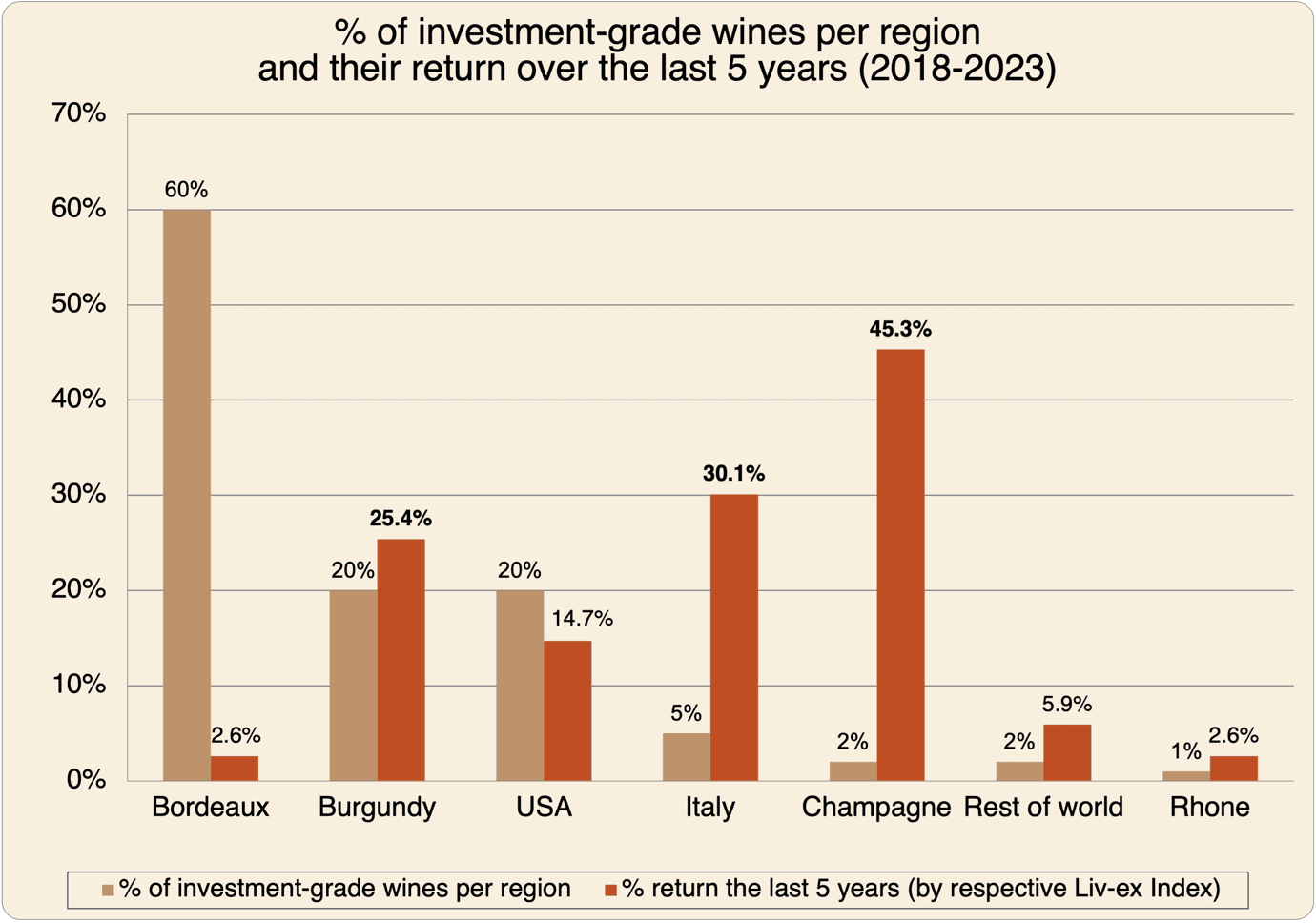
Over the past five years, Bordeaux has maintained a prominent position in the wine investment market, representing approximately 60% of total wine investments. This statistic demonstrates the region's wine influence on the global market. Even as other regions gain prominence, the Bordeaux wine region continues to lead and consolidate its position as one of the main pillars of the global wine market.
The essential Bordeaux châteaux
The rich histories, terroir, and winemaking methods contribute to the reputation of a château and its fine wines. Each property has its share in the Bordeaux wine legacy, from the prestigious Rothschild to the famous Château Cheval Blanc, Vieux Château Certan, Petrus, and Haut Brion.
Château Mouton Rothschild
One of the giants of the Bordeaux wine region, sitting atop the wine hierarchy and classified as Premier Grand Cru Classé, the highest classification in Bordeaux's hierarchy. The property is known for its exceptional quality, complexity, and aging potential.
The origins of the Château date back to the 14th century when it was known as Château de Brane until Nathaniel de Rothschild acquired the property in 1853. After replanting the vineyards and constructing a new castle, it was renamed Château Mouton Rothschild. The property spans 83 hectares of vineyards planted with 81% Cabernet Sauvignon, 15% Merlot, 3% Cabernet Franc, and 1% Petit Verdot. Some plots contain over 130 years old vines, highlighting the château's rich winemaking tradition.
Château Clerc Milon underwent various administrations until the Rothschild family took over in 1970. Since then, under the family's leadership, the property has undergone significant modernization, with winemaking facilities renovated and new viticulture and vinification techniques implemented, further enhancing the quality of the wines produced.
Located next to Mouton Rothschild in Pauillac, Clerc Milon has 45 hectares of vineyards planted with 50% Cabernet Sauvignon, 37% Merlot, 10% Cabernet Franc, 2% Petit Verdot, and 1% Carménère, maintaining one of the most extensive plantings of Carménère in Bordeaux.
Duhart Milon, situated northwest of Mouton Rothschild, is one of Pauillac's oldest and most prestigious vineyards. In 1920, the Rothschild family took over management, maintaining to this day a commitment to producing high-quality wines. In its extensive 188-hectare vineyard, 67% Cabernet Sauvignon and 33% Merlot are cultivated.
Château Lafite Rothschild
Ranked as Premier Grand Cru Classé, the château's history began over a century ago. Still, it was around 1680 that the vines that provided the prestige of Château Lafite Rothschild began to be planted. In 1868, Baron James de Rothschild acquired the Château, marking the beginning of an era under Rothschild family management.The vineyard of Château Lafite Rothschild spans 112 hectares and is planted with classic Bordeaux varieties: 70% Cabernet Sauvignon, 25% Merlot, 3% Cabernet Franc, and 2% Petit Verdot.
Carruades de Lafite is considered the second wine of Château Lafite Rothschild. Produced from grapes from a historic vineyard adjacent to the main château, Carruades de Lafite offers a similar style to Lafite Rothschild but with a more fruity and accessible character. It is an excellent option for those who wish to enjoy the quality and prestige of Lafite Rothschild at a more affordable price.
Château Cheval Blanc
Situated in Saint-Émilion, on the right bank of the Garonne River, its history dates back to the 18th century, becoming one of the most famous producers in the region. With 39 hectares divided into 45 lots, 52% Cabernet Franc, 43% Merlot, and 5% Cabernet Sauvignon are cultivated. Each plot has a specific profile due to vine age, soil type, and grape variety, providing complexity to the château's wines.Vieux Château Certan
One of the oldest properties in Pomerol. Founded in 1747 by Jean Demay de Certan, the château has undergone several management changes but has maintained its reputation for excellence and is ingrained in Bordeaux's winemaking tradition. With 14 hectares, the vineyard of Vieux Château Certan consists of 23 lots planted with 70% Merlot, 25% Cabernet Franc, and 5% Cabernet Sauvignon.With vineyards averaging 50 years of age, the vines are responsible for the unique character and complexity of the wines, which are considered among the best in Pomerol.
Château Petrus
A legend among Bordeaux wines, specifically from the Pomerol region, is recognized as one of the most prestigious and coveted in the world. Its history dates back to the 18th century when the property was known as "Petit Village," but it was only in the 19th century that it began to stand out as a wine producer. In 1925, the Arnaud family acquired the property, and since then, it has maintained the standard of excellence we know today as Château Petrus. The property's terroir has clayey and stony soils ideal for growing the Merlot grape variety; the château is quite secretive and does not provide any information about the composition of the vineyards.With an area of only 11.5 hectares, the Petrus vineyard is one of the smallest in the Bordeaux wine region, but its quality is unparalleled.
Château Haut-Brion
It is marked in history as one of Bordeaux's oldest wineries and directly participates in the tradition and innovation that created the standards of wine production in the region. Haut-Brion was the first property in Bordeaux to produce wines suitable for aging. Introducing more extended aging periods in barrels, revolutionizing winemaking with innovations that influence the quality of the wines from the Château and the region.With 50 hectares of vineyards, 45.4% Merlot, 43.9% Cabernet Sauvignon, 9.7% Cabernet Franc, and 1% Petit Verdot are cultivated for red wines and whites, 3 hectares are dedicated to planting 51.5% Sémillon, 48.5% Sauvignon Blanc, and a small amount of Sauvignon Gris.
Bordeaux has been recognized for centuries as one of the most prestigious wine regions in the world, and its wines are considered solid and secure investments, often with one of the highest scores from wine critics. The combination of tradition, quality, and international fame makes Bordeaux wines a desirable target for investors while they age gracefully and offer long drinking windows. Explore the top Bordeaux wines in our portfolio and start investing.