 | Have you ever come across a bottle of wine with a score of 90 or higher on a store shelf and wondered what that really means? In this article, we will delve into the intriguing world of wine scoring systems, unraveling how they work, who the key critics behind them are, and discussing the pros and cons of this approach. Let’s start by exploring the history behind the wine scoring system and how it evolved into a standard. |

Have you ever come across a bottle of wine with a score of 90 or higher on a store shelf and wondered what that really means? In this article, we will delve into the intriguing world of wine scoring systems, unraveling how they work, who the key critics behind them are, and discussing the pros and cons of this approach. Let’s start by exploring the history behind the wine scoring system and how it evolved into a standard.
How did the Wine Scoring System come about?
Assigning tasting scores and evaluating wines has been
common practices for centuries. However, the use of a
numerical system to rate wines is a relatively recent
innovation. During the 20th century, as interest in
wines grew in the United States, consumers were faced
with a multitude of wine options from around the
world. It was in this context that “wine critics”
emerged, dedicating themselves to evaluating and
recommending labels to make it easier for less
experienced consumers to choose.
One of the most significant milestones in popularizing
the numerical wine rating system was the American
critic Robert Parker, who patented his method in the
1970s. In Parker’s system, wines were evaluated on a
scale of 50 to 100, which could be associated with the
American A-to-F grading system. Wines that scored at
least 80 points were considered “above average” or
“good.” This allowed readers of specialized magazines,
such as “The Wine Advocate,” to quickly identify the
quality of wines based on numerical ratings.
How Does the Wine Scoring System Work?
The wine rating system is based on assigning a score,
usually by a wine critic, summarizing the assessment
of that label. Scores are subjective and may vary from
critic to critic. Each critic has their own rating
system and judgment criteria. However, some general
guidelines are common to most scoring systems.
The scores reflect not only the taste of the wine but
also the quality of production and its fidelity to the
style of the region of origin. This means that a wine
will be evaluated based on its typicity, that is, how
well it represents the style of the region where it
was produced.
The 100-Point Scoring Scale
The 100-point scoring scale is widely adopted in wine scoring systems. The overall scores are generally interpreted as follows:
- 50 to 59: Wine considered unacceptable and unsuitable for consumption.
- 60 to 69: Wine considered below average and not recommended but drinkable.
- 80 to 84: Wine considered above average to “good.”
- 70 to 79: Wine considered average.
- 85 to 89: Wine considered “good” to “very good.”
- 90 to 94: Wine considered “superior” to “exceptional.”
- 95 to 100: Wine considered an icon or “classic.”
Wines that receive scores below 80 points usually have
their reviews withheld, meaning the critiques are not
published.
Wine scores can be assigned in different ways. In most
cases, the score is given by a single critic who
tastes the wine. In some cases, the score is an
average of the opinions of several critics tasting the
same wine simultaneously.
In addition to the score, many critics provide
detailed descriptions of the wine, highlighting its
aroma, flavor, body, and aging potential. These
descriptions are valuable for consumers who want a
deeper understanding of the wine beyond the scores.
The Benefits of Wine Scoring

Wine scoring systems have brought a series of benefits to both consumers and the wine industry as a whole:
Ease of Choice
One of the greatest advantages of wine scoring systems is the ease of choice they provide to consumers. In a market flooded with options, numerical ratings allow you to quickly identify high-quality wines, even without deep knowledge of winemaking.
Effective Marketing
For wine sellers and stores, numerical ratings have become a powerful marketing tool. They eliminate the need to taste wines before putting them up for sale because quality is already “proven” by the scores. This simplifies the wine selection process for buyers and can boost sales.
Wine Appreciation
Wines that receive exceptional ratings, often above 90 points, see their prices rise considerably. This has created a wine investment market where collectors seek highly rated labels in the hope that their value will increase over time.
Global Market Growth
The influence of wine scoring systems has been crucial for the growth of wine markets in regions such as Asia, Russia, and South America. Numerical ratings have made it more accessible to purchase high-quality wines, stimulating interest worldwide.
The Drawbacks of Wine Scoring Systems
Despite their many advantages, wine scoring systems also face significant criticism and challenges:
Divergence of Opinions
Experienced critics often disagree when evaluating wines with scores above 90 points. Some prefer complex and bold wines, while others prefer complex and subtle ones. These differences can create confusion for consumers. Therefore, the rating systems of different critics can vary, making it difficult to directly compare evaluations from different sources.
Regional Variation
Wines from different regions, even with the same score, can have distinct characteristics due to terroir influences . This means that a wine with 90 points from California may be very different from a wine with the same score from France.
Lack of Evaluation for Many Wines
The number of wines evaluated is only a fraction of the wines released each year. Many wines, especially those from small producers, do not receive numerical ratings.
Homogenization of Regions
Wineries may be pressured to produce high-scoring wines to compete in the market, leading to the homogenization of wine styles in a region.
4 Leading Wine Critics
Several wine publications and critics have played a significant role in popularizing wine scoring systems. Some of the most respected names include:
The Wine Advocate
The Wine Advocate, led by Robert Parker, is one of the most influential publications in the world of wine. Although Robert Parker doesn’t personally rate all wines, his editorial team conducts most of the tastings. Reviews are conducted blind and consider the wine’s consistency and integrity.
In our portfolio you will have the opportunity to find wines with impressive Robert Parker scores. Some examples include: Château Cheval Blanc 2019 - 100/100 Points, Chambertin Grand Cru 2020, Trapet - 98/100, Barbaresco „Cottà“ 2019, Sottimano – 94/100; Corton Grand Cru 2020, Domaine Chandon de Briailles – 92-94 Points.
Jancis Robinson

Jancis Robinson, one of the most respected and influential wine critics in the world, also plays a significant role in the assessment and appreciation of wines. Her vast experience and profound knowledge are revered in the wine community, and her analyses contribute to the understanding and enhancement of wines on a global scale. Robinson is known for her elegant and impartial evaluation style, making her scores and reviews highly respected and sought after by wine enthusiasts and producers worldwide. Our choice for your investment Barbaresco „Currá“ 2016, Sottimano –17,5/20 Points.
James Suckling
James Suckling, former European editor of Wine Spectator, runs his own wine review website. He highlights wines scoring 90 or higher, evaluating both immediate pleasure and aging potential. Some of his highly scored wines can be found in our portfolio for your investment, such as Château Mouton Rothschild 2017 – 98/100 Punkte, Opus One 2019 – 99/100 Punkte.
Wine Spectator
Wine Spectator assigns scores based on evaluations by
specialized editors in specific regions. Each region
is analyzed by an experienced editor, and all tastings
are conducted blind. Wines are evaluated for their
aging potential, regardless of when they will peak.
In our portfolio, you will find wines with high scores
from Wine Spectator. Here are some examples: Brunello di Montalcino „Piaggione“ 2013, Salicutti – 96/100, Corton Grand Cru 2015,
Domaine Chandon de Briailles (94 Points).
Meet our award-winning wines
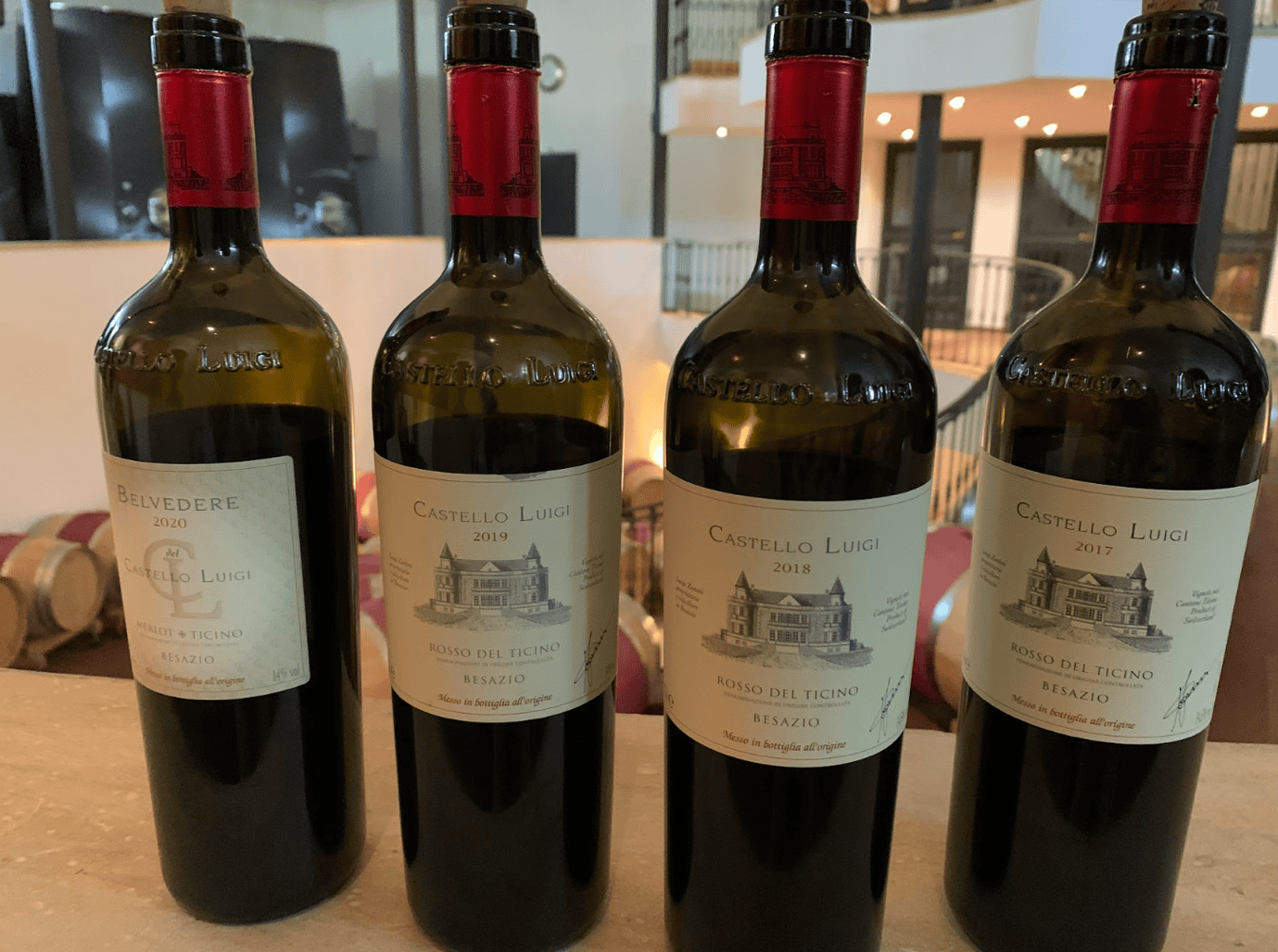
In our wine selection, you will find most wines rated highly by the world’s best wine critics.
We are excited to introduce a label that received a rare rating, recently in September 2023, the Rosso Del Ticino 2019, Castello Luigi. . This wine was awarded “Tre Bichieri” (three glasses, the highest rating) in the Gambero Rosso guide, signifying excellence and is highly valued by wine collectors and buyers worldwide.
The Gambero Rosso scoring system ranges from 0 to 3 “Bichieri,” which translates to glasses in Italian.
We are pleased to offer this incredible wine for your investment, with the maximum score from the Gambero Rosso guide.
3 Tips for Using Wine Scores Wisely
While wine scoring systems have their limitations, they can be a valuable tool for consumers. Here are some tips for using scores wisely:
Know the Source
When choosing wines based on scores, it’s important to consider the source of the reviews. Some critics tend to give higher or lower scores than others, so knowing the critic’s preferences can help with decision-making.
Consider the Region
Remember that the wine’s region of origin plays a crucial role in its style and flavor. If you enjoy a specific style of wine, take into account the region where it’s produced.
Develop Your Own Palate
The best way to choose wines you’ll enjoy is to develop your own palate. Experiment with different styles, regions, and grape varieties to discover what suits your taste.
Our team is committed to bringing the best wines from various regions of the world to cater to the diverse tastes of our customers and provide excellent investment options . We value the unique experience that each wine can offer and are dedicated to helping you find the perfect wine for every occasion.