Imagine a beautiful blank canvas, ready to receive an artist’s brushstrokes. They carefully choose the colors, textures, and strokes, placing their vision and emotions into each movement. Just like a work of art, wine is also a unique creation, shaped by nature and enhanced by the skill of the winemaker. And just as artists choose a canvas to showcase their masterpieces, wine producers choose labels to convey their stories. Thus, wine is a work of art in a bottle, telling the story of the producer, the winery, and the region in which it was produced.
Let’s see how art and wine blend into a unique and charming experience.
The ancient relationship between wine labels and art.
 | The relationship between wine and art is a connection that has existed for thousands of years. Since ancient times, people have used art to enhance the image, provide information, and add value to wines. |
The relationship between wine and art is a connection that has existed for thousands of years. Since ancient times, people have used art to enhance the image, provide information, and add value to wines.
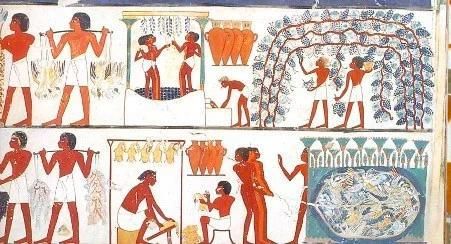
production, origin, and the name of the wine producer, on the seal of the amphorae. The numerous amphorae found in Tutankhamun’s tomb, who died in 1323 BC, attest to this type of labeling.
In ancient Greece, the ceramic vases that stored wine were often decorated with scenes depicting mythology and everyday life. In addition, the Greeks considered wine a source of inspiration for art, with many artists drinking wine to help stimulate their creativity.
In ancient Rome, after sealing, amphorae were engraved with the name of the wine and the number of amphorae produced with that specific type of grape. This engraving method was used until around the year 1600.
During this period, in England, glass bottles hermetically sealed with cork stoppers began to be used. The advent of glass bottles created the need for more accurate wine identification. This is how “label” was born.
The relationship between wine and art is, therefore, an ancient and lasting connection that still remains an important part of the wine industry today. Art has been a valuable tool to enhance the image and value of wines throughout history and will undoubtedly continue to do so in the future.
Art and wine: an inspiring relationship
 | Wine has always been a source of inspiration for artists from various cultures. Often portrayed in paintings as a symbolic element of wealth, status, or religiosity, artists such as Leonardo da Vinci, Michelangelo, Caravaggio, and Vincent Van Gogh incorporated wine into their artworks, creating vivid images that reflect the culture and traditions of their societies. |

Since ancient times, wine has been a source of inspiration for artists from various cultures. Often portrayed in paintings as a symbolic element of wealth, status, or religiosity, artists such as Leonardo da Vinci, Michelangelo, Caravaggio, and Vincent Van Gogh incorporated wine into their artworks, creating vivid images that reflect the culture and traditions of their societies.
Michelangelo also incorporated wine into his paintings. In his work “The Creation of Adam,” one of the most famous scenes on the Sistine Chapel ceiling, Michelangelo portrayed an angel holding a bunch of grapes, symbolizing the wine that would be produced from them. This painting is a classic representation of wine as a divine and sacred element.
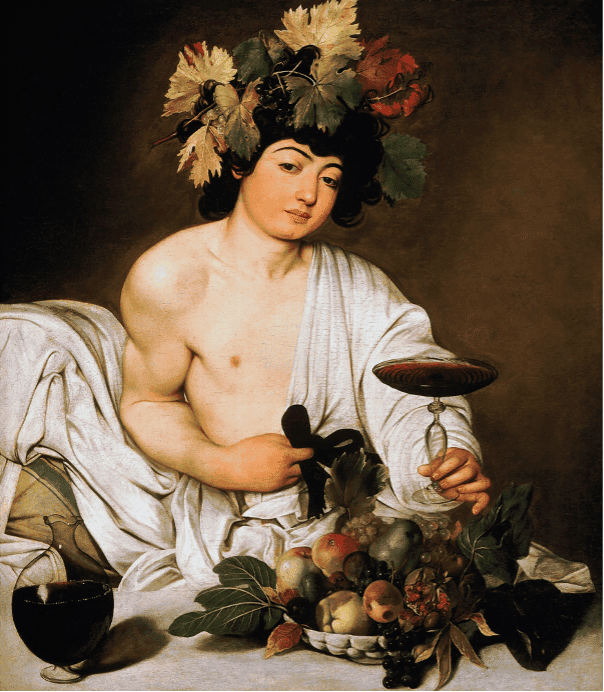
Caravaggio, in turn, was one of the most well-known artists for portraying wine in his paintings. In his work “Bacchus,” Caravaggio portrays the Roman god of wine holding a wine glass in one hand. The painting is an example of Caravaggio’s fascination with representing reality in a raw and vivid way.
Vincent Van Gogh frequently portrayed wine in his paintings, often in combination with bread and fruits. In his famous painting “Still Life: Wine, Bread, and Grapes,” Van Gogh used vibrant colors to portray a bottle of wine, a piece of bread, and some grapes on a table.
These examples show how wine has always had an important place in art, whether as a religious element, a representation of wealth and status, or as a form of expression of everyday life.
The history of Mouton Rothschild: the French winery with a deep relationship with art
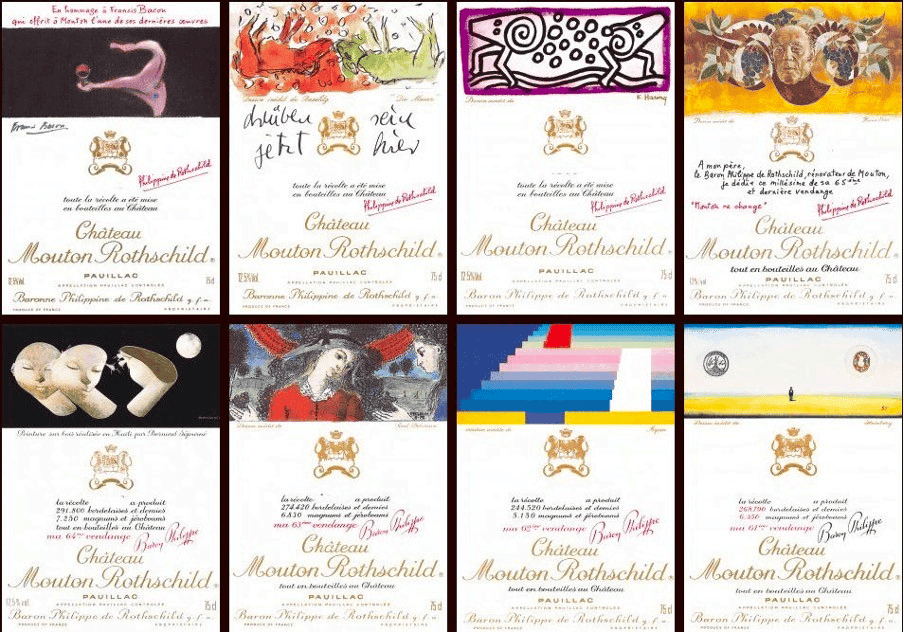
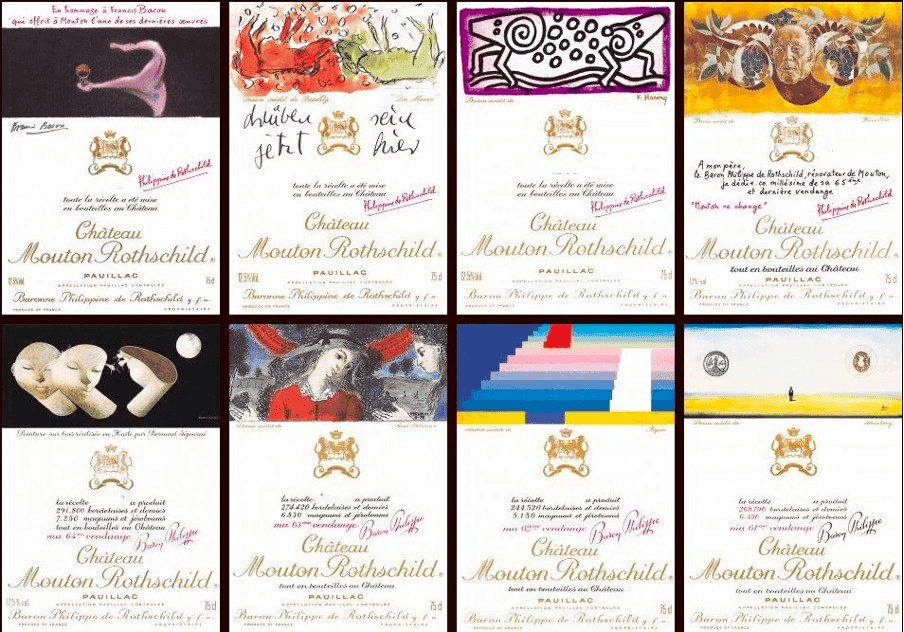
Château Mouton Rothschild is a French winery located in the Bordeaux region, known for its high-quality wines and iconic labels. The history of the winery is intertwined with that of the Rothschild family, who acquired the property in 1853. However, it was not until 1945, when Philippe de Rothschild took over the winery, that art became a fundamental part of the company’s identity.
Philippe de Rothschild decided to invite renowned artists to create the artwork for his wines’ labels, and since then, the winery has maintained this tradition, inviting artists of different styles and eras to create the works that adorn their labels. Some of the artists who have participated in the project include Salvador Dalí, Joan Miró, Pablo Picasso, Andy Warhol, and Jeff Koons.
The art on the labels of Mouton Rothschild’s wines has had a significant impact on the company’s business. In addition to making their wines more visually appealing, art has also added cultural and emotional value to the bottles, turning them into true works of art in themselves.
As a result, Mouton Rothschild’s wines have become more valuable and sought after by consumers, with prices easily exceeding thousands of dollars per bottle.
The use of art in their labels has also helped establish Mouton Rothschild as one of the most innovative and avant-garde wineries in the world, with a strong and globally recognized visual identity. The company has been able to maintain this tradition, even after Philippe de Rothschild’s death, thanks to its commitment to art and creativity, and its partnership with renowned artists has continued in recent years, with works by Anish Kapoor and Giuseppe Penone already featured on their wines’ labels.
Vinesia: where wine, art, and technology come together
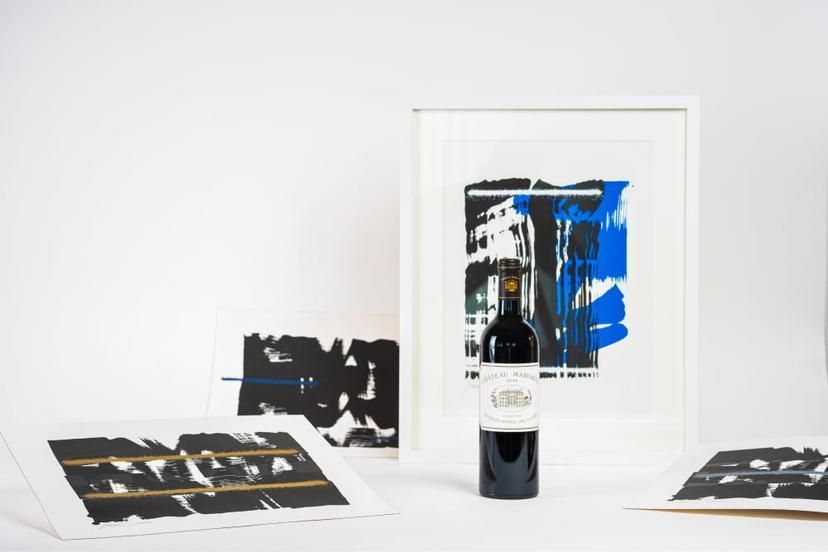
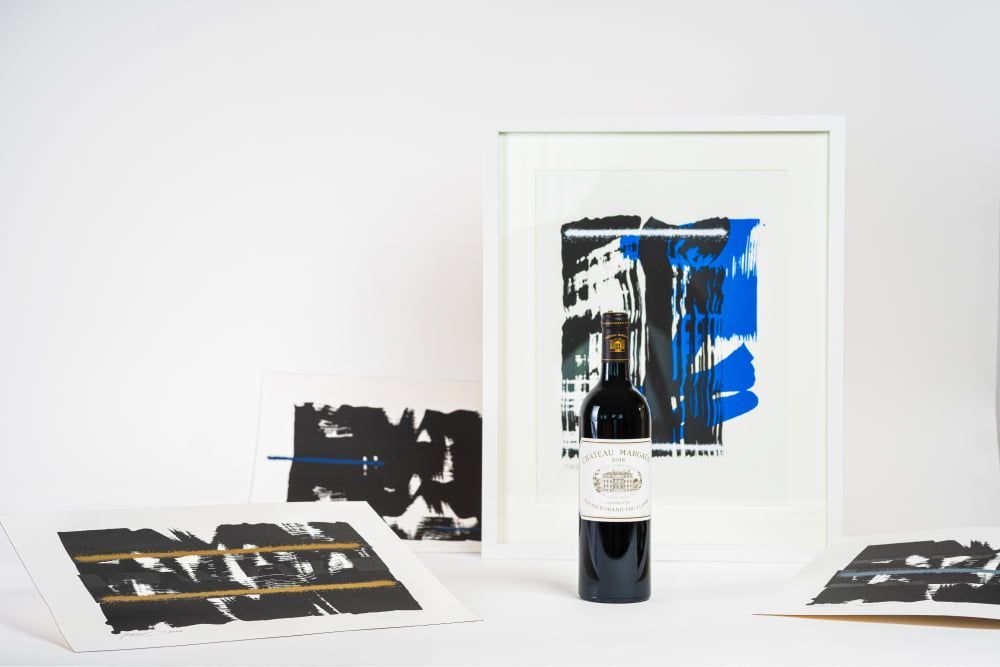 | With our unique perspective on the relationship between wine and art, we believe these two forms of expression can complement each other exceptionally. That is why we have decided to create signature collections that include an exclusive piece of art in each of its rare wine packages, created by artists such as Reso and MonsieurZ.
|
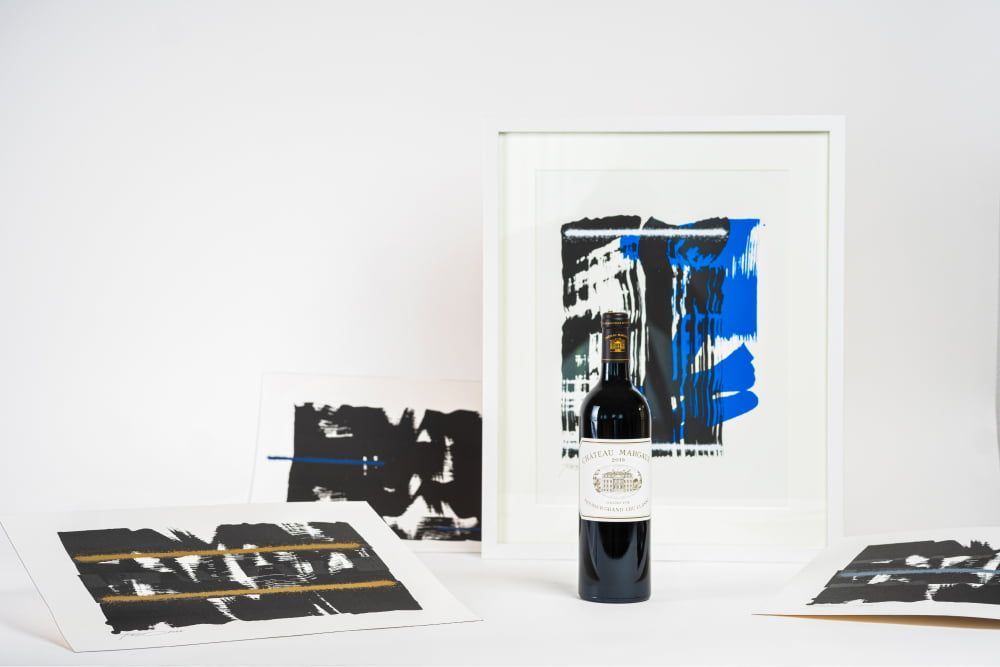
Vinesia is a company that stands out in the rare wine market, but its differential goes beyond that. The company has a unique perspective on the relationship between wine and art, and believes that these two forms of expression can complement each other in an exceptional way. That’s why Vinesia includes an exclusive piece of art in each of its rare wine packages, created by artists such as Reso and MonsieurZ.
By including an NFT of the art, we are expanding this experience even further into the digital world, allowing art and wine lovers to access this exclusive art from anywhere in the world. This also adds an additional layer of rarity to wine and art collections we offer on our marketplace, making it even more valuable.
The artist Reso’s vision
 | The artist Reso, better known as Patrick Jungfleisch, shared his vision of this relationship. |

The artist Reso, better known as Patrick Jungfleisch, shared his vision of this relationship.
It is fascinating to see how the close connection between wine and art is exemplified in the collaboration between Château Mouton Rothschild and a large number of famous artists. This collaboration has resulted in some of the most fascinating and beautiful wine bottles, which are now considered coveted collector’s items.
One could almost say that at Château Mouton Rothschild, the wine itself has become a work of art, meeting the highest aesthetic and quality standards.
The designed wine bottles are now not only a pleasure for the palate, but also for the eyes. They are evidence that wine and art represent an unbeatable combination, which exerts an unparalleled influence on the observer and the taster.